
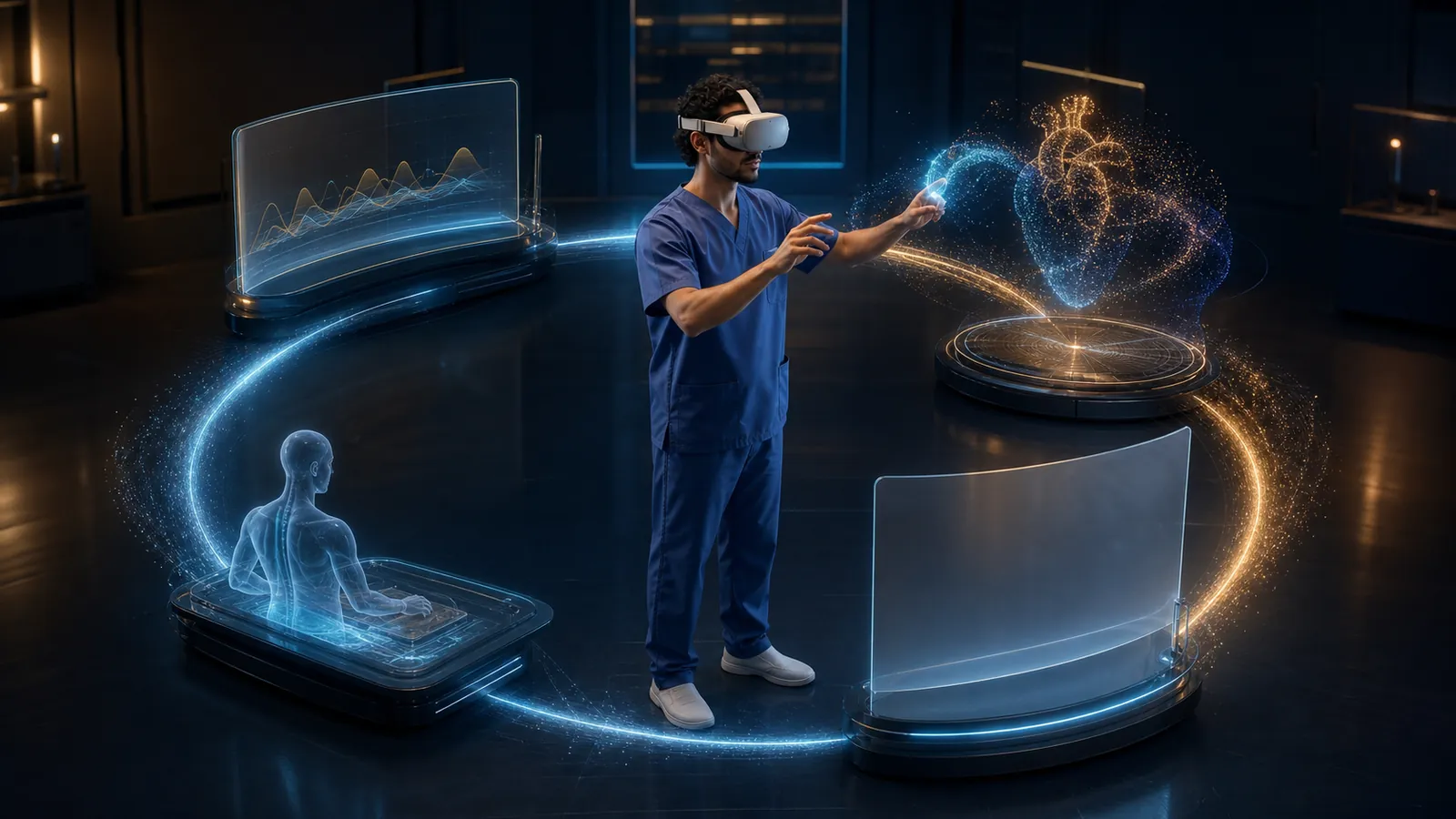
In professions that tolerate no error, training is measured by what is easy to count: hours attended and final scores. The trainee leaves with a record that says passed, and neither they nor their institution can answer the question that matters: can they do it when the moment comes?
The gap is the tools, not the effort
Video shows but doesn't drill. Lectures explain but don't test. A physical simulator affords one or two attempts per trainee a year at a cost that strains any budget. And feedback arrives days later, once the error has already set.
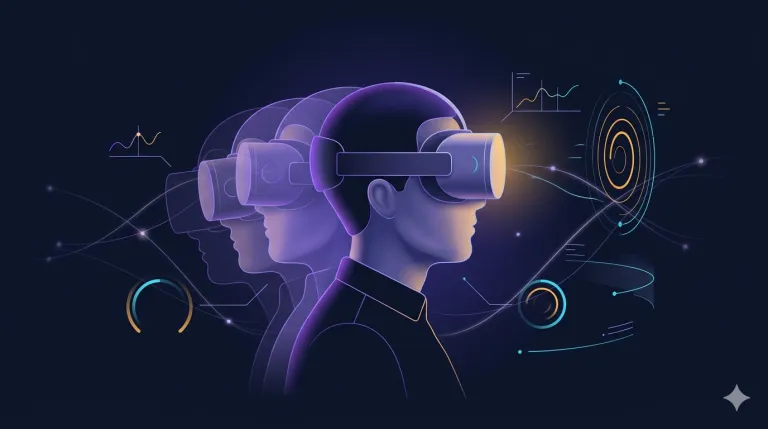
What changes inside immersive simulation
- Practice inside the situation, not around it. The trainee enters the real environment without its risk, and repeats without a ceiling: no materials consumed, no queue, no patient paying for the learning.
- Feedback that arrives during performance. Compression depth, response time, decision sequence: feedback reaches them mid-performance, so the next attempt corrects before the error hardens.
- Repetition at no marginal cost. The experience is built once, and the trainee repeats it until it holds, something no physical lab can offer at any budget.
Speed is the result. Proof is the point.
When full practice, live feedback, and free repetition combine, the road between "knows the step" and "their hands can do it" gets short. But the deeper difference isn't speed: every attempt is measured, so the trainee leaves with a performance curve documenting the journey to mastery, not an impression of it.
This chain is the product, and the hardware is a tool that serves it.
And how do we know mastery actually happened? That's the subject of the second article.